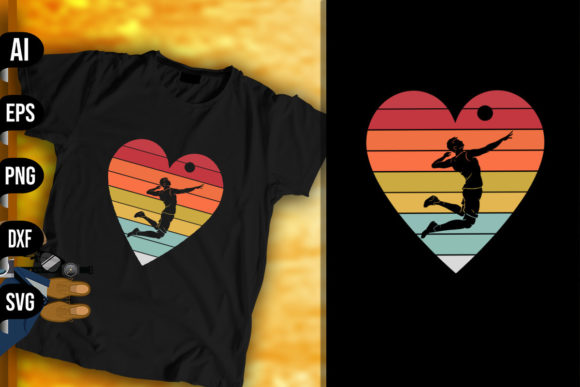
Retro Vintage Heart Volleyball Player
When I first opened the file for Retro Vintage Heart Volleyball Player, my immediate reaction was a mix of nostalgia and practical curiosity. As someone who has spent years stitching designs onto everything from baby onesies to boutique sweatshirts, I know that a great graphic isn't just about how it looks on a screen; it is about how it translates into thread. This design carries a specific mood—a warm, vintage aesthetic that feels hand-crafted even before the needle touches the fabric. It is a machine embroidery design that promises to bring a playful, retro energy to any project, but does it hold up under the scrutiny of real-world production?
The concept is simple yet effective: a volleyball player framed within a heart. It strikes a balance between sporty enthusiasm and sentimental affection. For an Etsy seller or a small business owner looking to create unique merchandise, this Graphics asset offers a versatile foundation. The layout suggests a classic chest placement on a hoodie or a central focal point on a tote bag. However, before I committed this to my hooping frame, I had to think through the technical realities of converting a digital image into a tangible embroidery project.
From Screen to Stitch: A Real-World Scenario
Let's imagine a specific scenario to test the viability of Retro Vintage Heart Volleyball Player. I am preparing a custom order for a local high school volleyball team's parents' night event. The goal is to create a batch of embroidered patches for their aprons and maybe some matching tote bags for the coaches. The client wants something that honors the spirit of the game without being overly aggressive or corporate.
This is where Retro Vintage Heart Volleyball Player shines. The vintage styling fits perfectly with the "classic" vibe often requested for school apparel. When I visualize the finished product, the heart shape acts as a natural container, keeping the design contained and preventing it from looking scattered. If I were to stitch this onto a dark-colored canvas tote bag, the contrast would be key. The design relies heavily on the interplay between the fill stitches and the background fabric. If the thread colors are chosen poorly, the retro aesthetic could get lost in the noise of the fabric texture.
I also considered using this for a personalized gift for a young athlete. Imagine a baby blanket or a nursery pillow featuring this motif. The soft curves of the heart soften the athletic stance of the player, making it appropriate for a younger demographic. In this context, the design serves as a bridge between two worlds: the competitive nature of sports and the tender environment of home life. That duality is exactly what makes a handmade product feel special and worth the premium price tag.
Performance on Various Fabrics and Garments
Not all fabrics behave the same way when they encounter an embroidery file. Retro Vintage Heart Volleyball Player has a moderate level of detail, which means its success depends heavily on the substrate. On a sturdy cotton twill cap or a denim jacket, the design should pop with excellent clarity. The satin stitches outlining the heart and the fill stitches within the player figure will lay down smoothly, creating a professional finish that enhances the garment's value.
However, caution is required with stretchy fabrics like standard t-shirt jersey or thin synthetic blends. Without proper stabilization, the tension of the machine can cause puckering, distorting the heart shape and ruining the symmetry. For these applications, I always recommend using a cut-away stabilizer to ensure the stitch density remains consistent. Similarly, if you plan to use this on a textured fabric like a heavy fleece or a knitted sweater, the needle might struggle to penetrate the loops evenly. In such cases, testing on a scrap piece of the exact material is non-negotiable.
I also evaluated the design's potential for smaller items. Can it work as a tiny logo on a phone case or a pin? While the description mentions it is print-ready for various uses, true embroidery has physical limits. Tiny lettering or intricate details in the corners of the design might get lost if the hoop size is too small. If you are aiming for a 3-inch patch, the fine lines might merge together, creating a muddy look rather than a crisp image. For these smaller projects, the design might need to be simplified or scaled up slightly to maintain visual appeal.
Strategic Considerations for Commercial Use
For those of us running a craft business or selling custom apparel, the choice of design impacts our brand consistency. Retro Vintage Heart Volleyball Player offers a cohesive look that works well across different product lines. You could use it on kitchen towels for a "home cook" theme, on aprons for a culinary class, or on hoodies for a sports club. The versatility allows you to create a unified collection without needing to source multiple unrelated graphics.
When presenting this as a printable mockup or a digital preview for clients, the design assets allow for easy customization. You can swap out the thread colors to match team uniforms or holiday themes. For instance, using red and white threads would make it perfect for Valentine's Day gifts, while blue and gold would suit a championship celebration. This flexibility increases the perceived value of your finished product and gives customers more options to choose from.
However, there are areas where this design requires careful handling. Dark fabrics demand high-quality, opaque thread coverage. If the fill stitch density is too low, the fabric color might show through, making the design look cheap. Conversely, on light fabrics, very dense stitching can create a stiff, board-like feel that detracts from the comfort of the garment. Always check the stitch density settings in your software before sending the job to the machine.
Essential Designer Notes Before You Start
Before you rush to hoop up your first item with Retro Vintage Heart Volleyball Player, there are a few critical steps to ensure a successful outcome. First and foremost, verify the licensing terms. Even though this is a commercial-ready asset, you must confirm whether you are allowed to sell the finished physical products or if the license restricts you to personal use only. This is a common pitfall for digital product sellers and small shop owners.
Next, perform a test run on scrap fabric. This is the golden rule of embroidery. Run the design through your machine to check for thread breaks, skipped stitches, or excessive pull. Inspect the small details closely; sometimes, what looks good on a monitor becomes difficult to stitch at full resolution. Pay attention to the transition points between different stitch types, such as where the satin stitch meets the fill stitch or the running stitch.
Also, consider the washing instructions for your final product. Embroidered items undergo significant stress during laundering. Ensure that the stabilizer you use is durable enough to prevent the design from unraveling over time. If the design is intended for a baby item or a frequently washed towel, a reinforced stabilizer is essential. Finally, compare your stitched sample against the original digital file in both color and black-and-white modes. This helps you identify any contrast issues that might not be immediately obvious in color.
In conclusion, Retro Vintage Heart Volleyball Player is a strong candidate for a wide range of embroidery projects. Its vintage charm and clear composition make it suitable for everything from holiday embroidery to commercial embroidery for teams and boutiques. By paying attention to fabric selection, stabilization, and thread choices, you can transform this digital template into a high-quality finished product that customers will love. Whether you are creating a personalized gift or building a line of small shop products, this design offers the creative freedom and professional polish needed to stand out in a crowded market.